
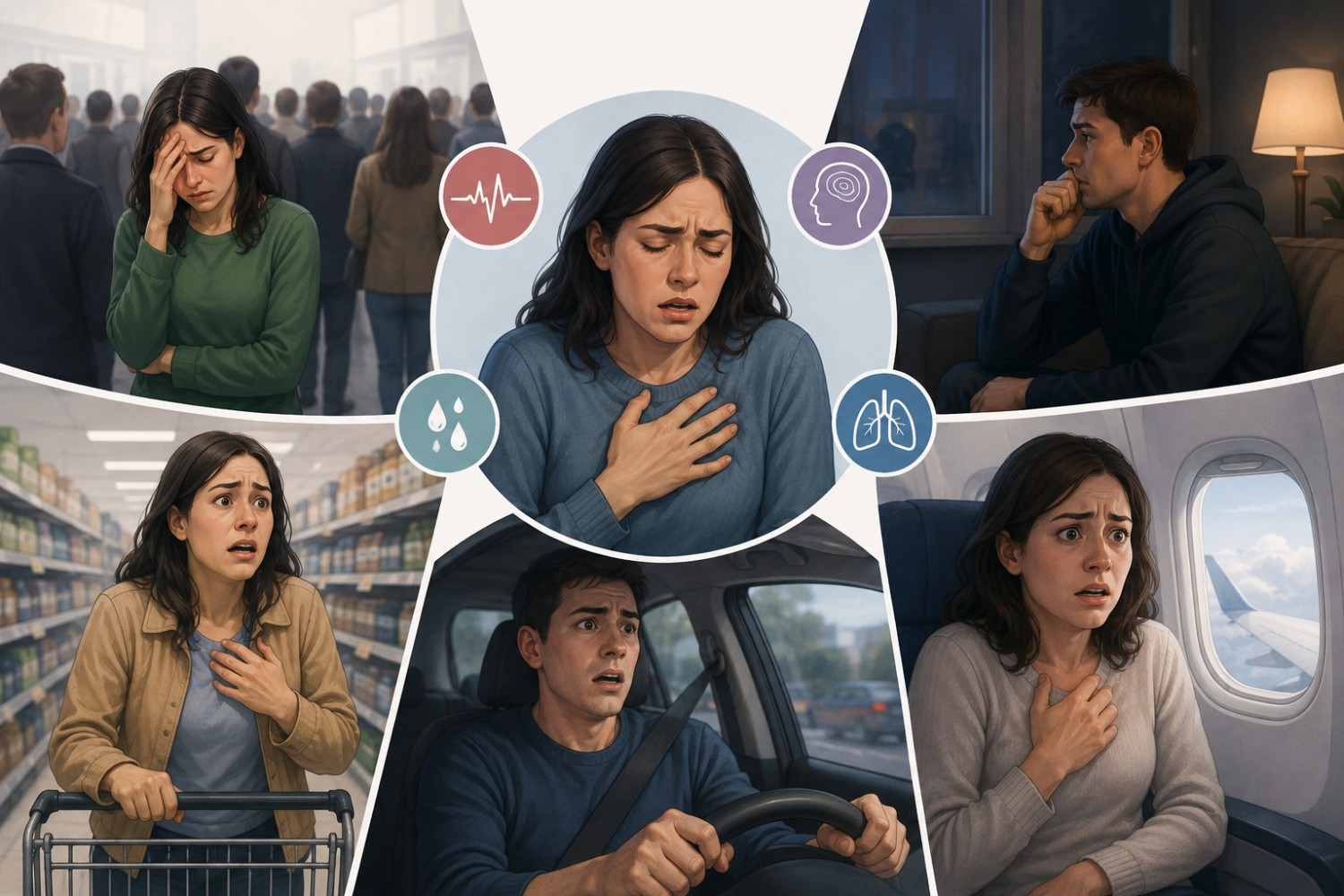
Learn about the 4 types of panic disorders, their symptoms, causes, diagnosis, treatment, and management to recognize panic attacks and seek timely care.
Panic Disorders are one of the most prevalent mental illnesses associated with anxiety, which affects millions of people around the globe. Panic Disorder is a disorder which is characterized by recurrent and unforeseen panic attacks, where a person experiences extreme fear without facing any imminent threat.
Although the panic attack itself is terrifying for an individual, recognizing the various types it could have will help one get diagnosed and treated promptly. In the clinical literature, there are four different types of panic disorders classified according to symptom development and co-occurring illness.
What Is Panic Disorder?
Panic Disorder is a type of mental disorder, which is marked by repeated, unexpected panic attacks and subsequent fear of having future attacks or changing behavior to prevent them. Panic attacks usually hit their maximum severity within minutes and can be accompanied by symptoms such as chest pain, heart palpitations, dizziness, shaking, sweating, and a sense of being out of control or dying.
What Is a Panic Attack?
A panic attack is an acute onset of extreme anxiety characterized by symptoms that reach their peak within a short time frame. Symptoms can include a pounding heart, difficulty breathing, sweating, tremors, chest pain, dizziness, nausea, numbness, and feelings of doom or dying. Although they may be scary, panic attacks are usually not dangerous.
4 Types of Panic Disorders
The following are the 4 types of Panic Disorders:
1. Unexpected (Uncued) Panic Attacks
Panic attacks that occur without any cause or warning happen abruptly and without a reason. It can occur while someone is relaxing, sleeping, or even in the course of their day-to-day activities. Since there is no apparent reason for the attack, such types of panic attacks seem to be scarier and more puzzling than other forms of attacks.
Key characteristics:
- Absence of a clearly identifiable trigger
- Sometimes happens while asleep (nocturnal panic attacks)
- Often serves as the defining symptom of panic disorder
- Increases anxiety due to unpredictability of attacks
2. Situational (Cued) Panic Attacks
The situational, or “cued,” panic attack occurs as a result of being exposed to a particular stimulus or environment. Crowded places, enclosed spaces, public speaking, and driving are some examples. Situational panic attacks have strong links to phobias and are prevalent in individuals suffering from social phobia and specific phobias.
Key characteristics:
- Triggered right away after being exposed to the stimulus
- Predictable response that is associated with a specific place, object, or situation
- Causes avoidance of the situation that triggers the response
3. Situationally Predisposed Panic Attacks
This kind of attack lies somewhere in between unexpected and situational attacks. The situationally predisposed panic attack has a high likelihood of happening in a particular situation, but not always when that person gets exposed to it, and there can also be a lag between the exposure and the attack.
Key characteristics:
- Higher probability (not guarantee) in particular circumstances
- Delayed reaction following the stimulus
- Usually associated with circumstances where there is perceived loss of control, like being stuck in traffic or standing in a long queue
4. Limited-Symptom Panic Attacks
Limited symptom attacks are characterized by the rapid appearance of fear, like the one present in a panic attack, but with fewer than four of the physical or psychological symptoms used in diagnosing a clinical panic attack. These mini panic attacks are disturbing to experience and usually indicate the tendency of developing panic disorder in the future.
Key characteristics:
- Fewer than four panic attack symptoms are evident
- Reduced duration or intensity of complete panic attacks
- Still capable of interfering with normal activities
- Gradually led to complete panic attacks when left untreated
What causes panic disorder?
Genetics
Panic disorder can also be brought about by genetics. Individuals with people in their family suffering from anxiety or panic disorders have higher chances of developing panic disorder, implying that genetics and biology play a role in enhancing one’s vulnerability to stress and fear.
Life Changes
Life events that can serve as panic triggers include divorce, loss of employment, relocation, financial problems, or the passing away of a close relative. When an individual encounters considerable levels of stress, their ability to cope with it becomes ineffective and leads to panic attacks.
Anxiety
Anxiety disorders, already present or chronic times of worry, can predispose someone to panic disorder. Persistent anxiety activates the stress response system, increasing the chances of a panic attack happening when under emotional strain.
Brain Function
Abnormal activity in the brain related to regions involved in fear, emotion, and the body’s response to stress could also be responsible for panic disorder. An imbalance in neurotransmitters can make the brain react to non-threatening conditions as if they pose a threat.

Common Symptoms of Panic Disorder
Panic attacks tend to have common symptoms, whether they fall under any category, such as:
- A fast or pounding heartbeat
- Shortness of breath or feeling of being smothered
- Chest pain or chest discomfort
- Sweating, trembling, or chills
- Lightheadedness or dizziness
- Nausea or abdominal distress
- Feeling numbness or tingling sensations
- Feelings of unreality (derealization), or depersonalization
- Fear of losing control or “going crazy”
- Fear of dying
How Panic Disorder Is Diagnosed
Panic disorder is usually diagnosed by a health care professional based on:
- Symptoms, frequency, and triggers’ discussion
- Physical examination to exclude any underlying physical problems
- Psychological assessment based on diagnostic criteria
- Exclusion of other similar anxiety disorders and mood disorders
Since the symptoms of panic disorder might be confused with some medical problems, such as heart disease and thyroid problems, it is vital to consult a professional in the field.
When to Seek Help
Panic attacks that are becoming increasingly common, interrupting your everyday routine, or making you avoid your normal activities should make you see a healthcare expert. This could help you avoid the risk of escalating your condition to a worse stage.
Frequently Asked Questions
Are all 4 types of panic attacks part of the same diagnosis?
Yes. An individual diagnosed with panic disorder may have any or all of these attack forms throughout his or her lifetime, and the nature of the attacks may change with the progression or treatment of the condition.
Can panic disorder go away on its own?
Some mild instances of the disorder may not need any treatment and can be managed through therapy and lifestyle changes alone, but most patients will greatly benefit from professional help.
Is panic disorder the same as anxiety?
A panic disorder is one of many anxiety disorders. General anxiety increases slowly; however, a panic attack can start suddenly and is extremely intense and reaches its peak within 10 minutes.
Conclusion
The knowledge about the 4 types of panic disorders is very helpful for people to identify the symptoms and take proper steps for treatment. Although the panic attacks may be terrifying for a person, there are many different treatments, including CBT, medications, stress management, and lifestyle changes, which can greatly ease the symptoms.