
Does NyQuil help you sleep? Learn how NyQuil causes drowsiness, its benefits, side effects, risks, ingredients, and safer sleep alternatives.
What Is NyQuil?
NyQuil is a nonprescription cold and flu remedy that is taken to treat symptoms like cough, fever, body aches, sore throat, runny nose, and sneezing. It has an active ingredient that also includes a sedating antihistamine to help ease the sleepiness of a person who is ill and can help them sleep better to recover.
Does NyQuil Help You Sleep?
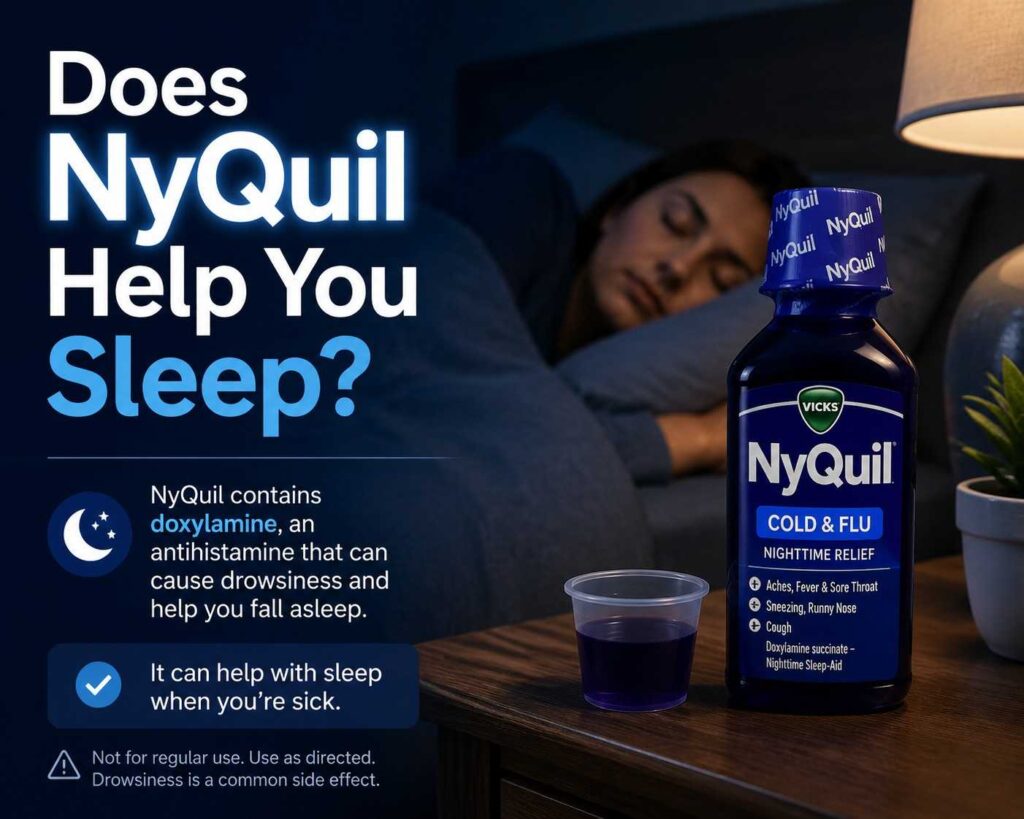
Yes, NyQuil can help you sleep since it includes a sedating antihistamine, which is a sleep-inducing agent. This isn’t to treat insomnia or sleep disorders; however, it’s designed to relieve symptoms of a cold and the flu. NyQuil can help you sleep through sickness, but it is not recommended for use as a long-term sleep aid because of the possibility of side effects and exposure to unnecessary medications.
Why Does NyQuil Make You Sleepy?
Typically, the sleep-inducing ingredient will be doxylamine succinate, a first-generation antihistamine. Acts by inhibiting histamine receptors in the brain. Normally, histamine keeps you alert and awake.
If the histamine activity is decreased:
- You become drowsy.
- Your reaction time slows.
- You feel relaxed.
- Falling asleep becomes easier.
This sedative quality is what is responsible for doxylamine’s presence in many nighttime cold medicines.
How NyQuil Works to Promote Sleep
The sleep-promoting effect of NyQuil occurs from the doxylamine succinate, a sedating antihistamine that binds with histamine receptors in the brain, which decreases alertness and increases drowsiness. It also helps alleviate cold and flu symptoms, so you can sleep more comfortably while your body recovers from the illness.
The Case Against Using NyQuil as a Regular Sleep Aid
The experts in health care and pharmacists usually recommend not taking NyQuil only for sleep because of the following reasons:
1. It’s Not Designed as a Sleep Aid
NyQuil isn’t meant for treating insomnia. Taking only for sleep makes your body absorb medicines you don’t need (such as acetaminophen, dextromethorphan) that could pose health risks over time.
2. Tolerance Can Develop Quickly
Doxylamine, an ingredient in NyQuil that is used to get sleepy, can lose its effectiveness over time. With increased tolerance to the drug, some individuals may need the drug to get the sleepy effect, thereby increasing the risk of side effects.
3. Regular Acetaminophen Use May Harm the Liver
NyQuil taken nightly results in repeated doses of acetaminophen. Long term use of acetaminophen and other medications containing acetaminophen (like Tylenol) can cause health problems, such as liver damage.
4. Morning Drowsiness Can Affect Daily Activities
Doxylamine can last for 6-8 hours or more. Regular nighttime use is less appropriate for daily functioning, as many users become groggy, have slower reaction times, decreased concentration, and impaired driving ability the following day.
5. Greater Risks for Older Adults
Antihistamines, such as doxylamine, are more likely to cause side effects in older adults. NyQuil should not be used as a sleep aid in the elderly due to an increased risk of confusion, dizziness, falls, memory issues, and cognitive impairment.
6. Dangerous When Combined With Other Sedatives
Alcohol, melatonin, prescription sleep medications, or other sleep medications can significantly enhance drowsiness when combined with NyQuil. This combination can sometimes cause a decrease in breathing and awareness, and increase the chances of life-threatening emergencies.
What are the ingredients in Nyquil, and which ones can make you sleepy?
Acetaminophen
Acetaminophen works to reduce fever, headache, muscle pain, and body pain caused by colds and flu. Does not make you drowsy and is added to help ease any pain and discomfort during recovery.
Dextromethorphan HBr
Dextromethorphan HBr is a cough suppressant that helps suppress excessive coughing by affecting the cough center in the brain. Does not make you sleepy, but may cause slight dizziness in some.
Doxylamine Succinate
Doxylamine succinate is a sedating (sleep-causing) anti-histamine drug that helps to stop sneezing and a runny nose. This is the key component in NyQuil that creates sleepiness and aids in sleep.
Phenylephrine HCl
Phenylephrine HCl is a nasal decongestant that helps to decrease the swelling of the nasal passages and so improves breathing during nose congestion. It isn’t sleep-inducing, and for some it can be a slight stimulant.
NyQuil Side Effects and Risks
NyQuil is safe for use when followed as directed and for short-term relief of cold and flu symptoms. As with any drug, it can have side effects. They tend to be mild and short-lived, but some may have more severe reactions, particularly older adults or those with medical conditions.
Side effects are:
- Drowsiness
- Sedation
- Lightheadedness
- Upset stomach
- Nausea
- Blurred vision
- Dry mouth
- Difficulty urinating
What else can help with getting good sleep?
Stick to a Sleep Schedule
Sleep and get up at regular hours, even on the weekends. Maintaining regular sleep habits can help stabilize your body’s internal clock and enhance sleep quality.
Find Ways to Relax Before Bed
Establish a relaxing nighttime routine, such as reading, meditation, stretches, or deep breathing. With sleep, it is fortunate that it relaxes before sleep, it quiets down the mind, and facilitates the onset of sleep.
Avoid Naps During the Day
Long naps during the day and late afternoon may disrupt sleep at night. If you need a nap, try not to nap for more than half an hour, and avoid napping too close to bedtime.
Prepare Your Bedroom
Maintain a cool, dark, quiet, and comfortable bedroom. Create a sleeping environment that will promote deep and uninterrupted sleep each night by using supportive bedding, minimizing noise, and blocking unwanted light.
Avoid Electronic Devices
Reduce screen time in the hours leading up to sleep, as blue light from screens can inhibit the production of melatonin. Switch off electronic devices 1 hour prior to sleep.
Get Regular Exercise
Get regular exercise to improve sleep quality and to speed up falling asleep. Get some exercise most days and try not to do too strenuous an activity near bedtime.
Avoid Substances Known to Disrupt Sleep
Reduce caffeine, smoking, drinking alcohol, and heavy food intake before sleep. These chemicals may disrupt sleep, interfere with the ability to sleep, and lead to frequent waking or disrupted sleep during the night.
Reduce Stress
Practice mindfulness, journaling, yoga, or breathing exercises to manage daily stress. Stress reduction can reduce the activity of your nervous system, allowing you to relax and sleep better.
Use an Insomnia App
Insomnia Apps will include guided meditation, relaxation techniques, sleep tracking, and CBT sleep techniques. They can contribute to healthier sleep routines and contribute to better long-term sleep patterns.
When Taking NyQuil to Sleep Is Reasonable
Taking NyQuil at night is perfectly justified when you’re suffering from cold or flu symptoms because that’s why it was made, and sleeping well while recovering from an illness is one of its goals. Moderate use means:
- Doing exactly what the label says
- Not having more than 4 doses of the acetaminophen-containing drug within 24 hours
- Staying away from the drug if you are taking another acetaminophen-containing drug
- Using the drug only for the short period of your illness (usually less than one week)
- Not using it if you are pregnant, nursing, above 65 years, or suffering from a chronic disease without consulting a doctor first
Who Should Avoid NyQuil
NyQuil might not suit all people. Liver problems, glaucoma, breathing issues, urination difficulties, or alcohol dependence should not take NyQuil except on medical advice. Pregnant women, elderly patients, and those taking other medicines should first speak to a doctor before using NyQuil.
When Should You See a Doctor?
See your health care professional if:
- You have had insomnia for more than three weeks.
- You require medication in order to sleep.
- You experience loud snoring or breathing cessation when asleep.
- You feel extremely tired upon waking every morning.
- Your sleeping problems are affecting your work or daily activities.
Chronic sleep problems could be a sign of an existing medical or sleep disorder.
FAQs
Does NyQuil make everyone sleepy?
No. Many experience grogginess due to doxylamine, depending on their age, overall health condition, other drugs they may be taking, and individual sensitivity to drugs.
Can I use NyQuil instead of a sleep aid?
No. NyQuil is a remedy for treating colds and flu; it is not meant for use by those suffering from insomnia. Taking NyQuil just to get some rest is not advised.
Is NyQuil addictive?
NyQuil is not addictive physically like certain prescription medicines for sleep. However, it is advised that people should not take NyQuil regularly to go to sleep, as this will hinder the diagnosis of their sleeping problem.
Is NyQuil safe to take just for sleep?
Occasional use could be safe for most healthy individuals when used as directed on the label; however, regular use just to induce sleep is discouraged.
Conclusion
Doxylamine acts as a sedative to help you sleep for a short period of time by inhibiting cold symptoms, so NyQuil can help you sleep temporarily. It is not a sleep aid, however, and shouldn’t be taken regularly to help you sleep. Safe use involves adhering to the instructions for dosage, not using unnecessarily, and seeking professional advice for continued insomnia.