Can you swallow a dissolvable tablet? Learn which dissolvable tablets can be swallowed, which cannot, risks, benefits, and proper usage tips.
What Is a Dissolvable Tablet?
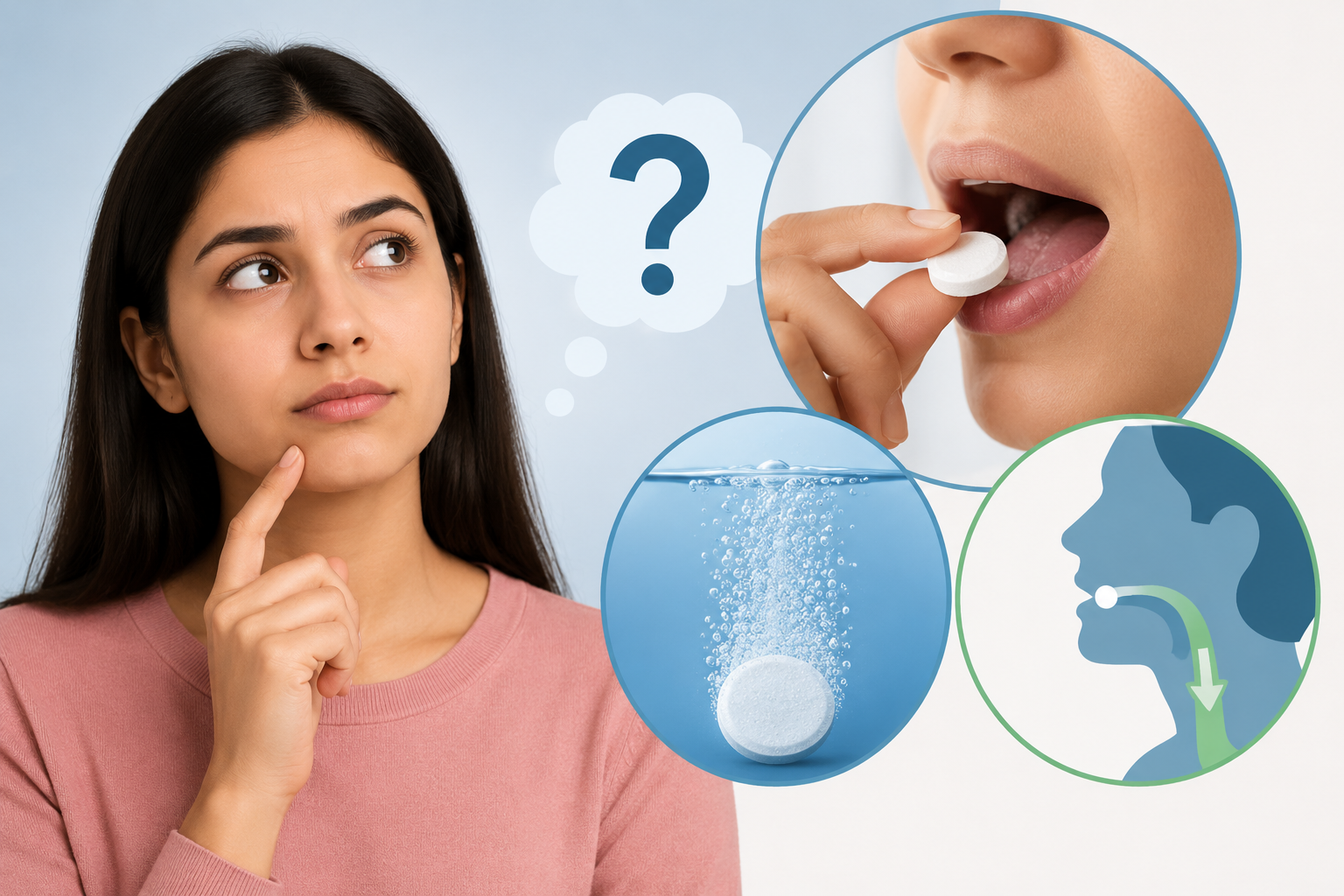
A dissolvable tablet is a solid kind of dosage form, made so it can break down or dissolve without you having to swallow it whole, with water. It’s basically engineered to fall apart when it meets saliva, some moisture, or water in general (especially if it’s the effervescent sort).
There are a few clear categories, and figuring out what type you have is the main point for knowing if you can swallow it or not, in practice:
1. Orally Disintegrating Tablets (ODTs)
Also called “fast-dissolving” or “melt-in-your-mouth” tablets, ODTs are put on the tongue, and they dissolve rather quickly, usually somewhere in the range of 30 to 60 seconds. Common examples are, for instance :
- Zofran ODT (ondansetron) for nausea
- Zyprexa Zydis (olanzapine) for mental health conditions
- Claritin RediTabs (loratadine) for allergies
- Rizatriptan (Maxalt-MLT) for migraines
2. Sublingual Tablets
These are set under the tongue and absorbed straight into the bloodstream via the mucous membranes. They’re made on purpose to get around the digestive tract. Examples include :
- Nitroglycerin for chest pain (angina)
- Buprenorphine (Suboxone) for opioid dependence
- Certain B12 supplements
3. Buccal Tablets
Placed between the gum and the cheek, buccal tablets dissolve more slowly and are taken in through the inner lining of the mouth. Examples include, in some cases, testosterone and fentanyl formulations.
4. Effervescent Tablets
Dropped into water to form a fizzy liquid, then sipped/drunk. Examples include :
- Alka-Seltzer
- Vitamin C effervescent supplements
- Certain pain relievers, like aspirin effervescent
Can I Swallow a Dissolvable Tablet?
Yes, in some cases, you can take dissolvable tablets; however, that does not apply to all dissolvable tablets. There are dissolvable tablets that must first dissolve under the tongue or between the cheek and gums. Dissolvable tablets should always be taken in accordance with the instructions, as taking some dissolvable tablets by swallowing might affect their effectiveness.
Why Are Dissolvable Tablets Prescribed?
There are many advantages to using soluble tablets from a clinical perspective:
Difficulty Swallowing (Dysphagia)
Many patients – especially the elderly, young individuals, and patients with neurological disorders – have difficulties swallowing ordinary tablets or capsules. The ODT formulation provides a solution to these challenges.
Faster Onset of Action
The absorption rate of sublingual medications or ODT drugs is faster compared to orally taken pills. This is especially essential in cases where prompt action is needed, such as:
- Angina (chest pain)
- Acute migraines
- Severe nausea
- Anxiety or panic attacks (some benzodiazepine formulations)
Better Bioavailability
Some medicines are not well-absorbed by the GI tract but show great efficacy when taken sublingually or buccally. It becomes possible to obtain the needed pharmacological effect with a lower dose.
Convenience — No Water Needed
ODT medicines are especially helpful in cases where water is not available, for example, when traveling or first thing in the morning.
Compliance in Special Populations
Both children and older adults have a higher likelihood of swallowing their medicine properly if they do not have to swallow the entire pill. Medication adherence is improved by this process.
When Swallowing May Be Acceptable
Some oral dissolving tablets are simply formulated for convenience. Swallowing them, however, would not reduce their effectiveness, since they would eventually be absorbed by the body anyway.
These include, but are not limited to:
- Antihistamine drugs
- Vitamins
- Supplements
But their effectiveness and speed of working might vary.
When Swallowing Is Not Recommended
Some dissolving tablets depend on oral tissue absorption.
Some examples are:
- Sublingual drugs
- Buccal drugs
- Emergency drugs
Swallowing these tablets may:
- Loss of efficacy
- Delayed action
- Lessened absorption
- Therapeutic failure
Always adhere to the prescription of your doctor and/or medication instructions.
Common Dissolvable Tablet Medications and Whether They Can Be Swallowed
| Medication | Type | Can Be Swallowed? |
| Ondansetron (Zofran ODT) | ODT | Yes, with reduced speed of action |
| Loratadine (Claritin RediTab) | ODT | Yes |
| Rizatriptan (Maxalt-MLT) | ODT | Yes, though sublingual is preferred |
| Nitroglycerin (sublingual) | Sublingual | No — reduces effectiveness critically |
| Buprenorphine/Naloxone (Suboxone) | Sublingual | No — very low oral bioavailability |
| Fentanyl buccal tablet (Actiq) | Buccal | No — safety concern |
| Alka-Seltzer | Effervescent | No — dissolve in water first |
| Vitamin C 1000mg effervescent | Effervescent | No — dissolve in water first |
Risks of Swallowing the Wrong Type of Dissolvable Tablet
Reduced Drug Effectiveness
The main disadvantage associated with using liquids is the decreased effectiveness of the drug. In case of taking regular medications (antihistamines), this will cause no problem, but in other cases, this could be quite a severe problem.
First-Pass Metabolism
Most of the drugs that are administered sublingually have been developed in such a manner because they are degraded by the liver in large quantities before entering the blood circulation system (first pass effect). Therefore, if swallowed, they become virtually ineffective.
Altered Safety Profile
There are concerns about the efficacy of some medications, especially opioids, administered orally. Oral delivery may affect their pharmacological effect due to timing, especially concerning the peak concentration.
Gastrointestinal Irritation
Sublingual and buccal tablets may contain some excipients that are not formulated for gastrointestinal activity and may lead to gastric disturbances or even nausea if swallowed.
Special Considerations
For Children
ODTs are recommended for children since they are unable to swallow pills. Always adhere to the instructions provided by your pediatrician. Do not think that if you have an ODT prescribed for a child and he/she does not allow the ODT to dissolve, you can swallow it.
For the Elderly
The older population usually takes several medications, some of which could include nitroglycerin, used for heart ailments and administered sublingually. One must have enough knowledge about how to administer such drugs, especially in emergencies.
For Patients with Dry Mouth
Dry mouth as a result of either conditions or drugs will increase the dissolution rate of the ODT. Using a tiny amount of water prior to placement of the ODT in your mouth is advisable, although you should consult your pharmacist first about this.
Pregnancy
Always seek advice from your doctor or pharmacist before using any dissolvable tablets when pregnant. Some may be safe, some dangerous, and how the medicine is used is key.
What Happens If You Accidentally Swallow a Dissolvable Tablet?
If you happen to swallow a dissolvable tablet by mistake, the results will vary depending on the medicine itself.
Possible effects include:
- The medication still works normally
- Slower onset of action
- Reduced absorption
- Lower effectiveness
- Delayed symptom relief
Swallowing many orally disintegrating tablets unintentionally does not pose serious risks. However, in the case of sublingual and buccal drugs, efficacy may be affected. If you feel worried about this matter, it is better to get professional recommendations from a pharmacist or medical personnel.
How to Take a Dissolvable Tablet Correctly
Here’s how you can take the tablet properly:
1. Read all drug information thoroughly.
2. Clean your hands before using the tablet.
3. Position the tablet on your tongue, under your tongue, or in the cheek region based on instructions.
4. Allow the tablet to dissolve fully.
5. Do not chew unless told otherwise.
6. Wait before eating or drinking, as recommended by the manufacturer.
Signs You Should Not Swallow a Dissolvable Tablet
Many medication instructions specify how the tablet is meant to be ingested. Statements like “put under the tongue,” “let it dissolve completely,” “do not swallow,” or “dissolve in water before ingestion” suggest that swallowing the tablet will affect its purpose. It is important to follow the instructions given to increase the effectiveness of the medication and avoid failure of the treatment.
Benefits of Taking Dissolvable Tablets Correctly
Taking dissolvable tablets as per their directions ensures that the drug will work in its right capacity. Taking the dissolvable tablet properly may ensure effective absorption of the drug and increased effectiveness, along with providing rapid relief from symptoms if required. Dissolvable tablets also make life easy for those who find it difficult to swallow regular tablets.
Common Mistakes When Taking Dissolvable Tablets
One of the most frequent mistakes is taking the tablet without letting it dissolve completely. Other common mistakes include chewing on the dissolving tablet rather than waiting for it to dissolve. People who drink water immediately after inserting the dissolving tablet into their mouths are doing something that can disrupt the absorption process for particular medicines.
When to Seek Medical Advice
Consider seeing a healthcare practitioner in case:
- You take a sublingual drug such as nitroglycerin or buprenorphine accidentally and do not get relief.
- You have some unusual adverse effects after taking the pill orally.
- You consistently have problems administering dissolving tablets and want to try another drug form.
- You are not sure if a drug you have needs to be taken by swallowing or dissolving.
Common Myths About Dissolvable Tablets
Myth 1: All Dissolvable Tablets Can Be Swallowed
It is not recommended to swallow all dissolvable tablets, as some tablets have been developed for better absorption by the mouth tissues.
Myth 2: Swallowing Doesn’t Change Effectiveness
Taking specific dissolving medications can cause decreased drug absorption, slower action, or reduced efficiency compared to other drug delivery techniques.
Myth 3: Dissolvable Tablets Work Instantly
Dissolving drugs are usually quick-acting when compared to other forms of drugs, but even then, time is needed for dissolution, absorption, and effect.
Myth 4: Dissolvable Tablets Are Only for Children
Dissolvable tablets are frequently used by adults due to their ease, quick action, efficient administration, and better patient compliance.
Conclusion
Dissolvable tablets are made for a particular way of taking them, and whether you can just swallow them depends on the type. Some orally disintegrating tablets might still do their job if you swallow them, but sublingual, buccal, and effervescent tablets really need proper handling. In other words, follow the directions on the medication packaging, because that’s how you keep both safety and effectiveness on track.