
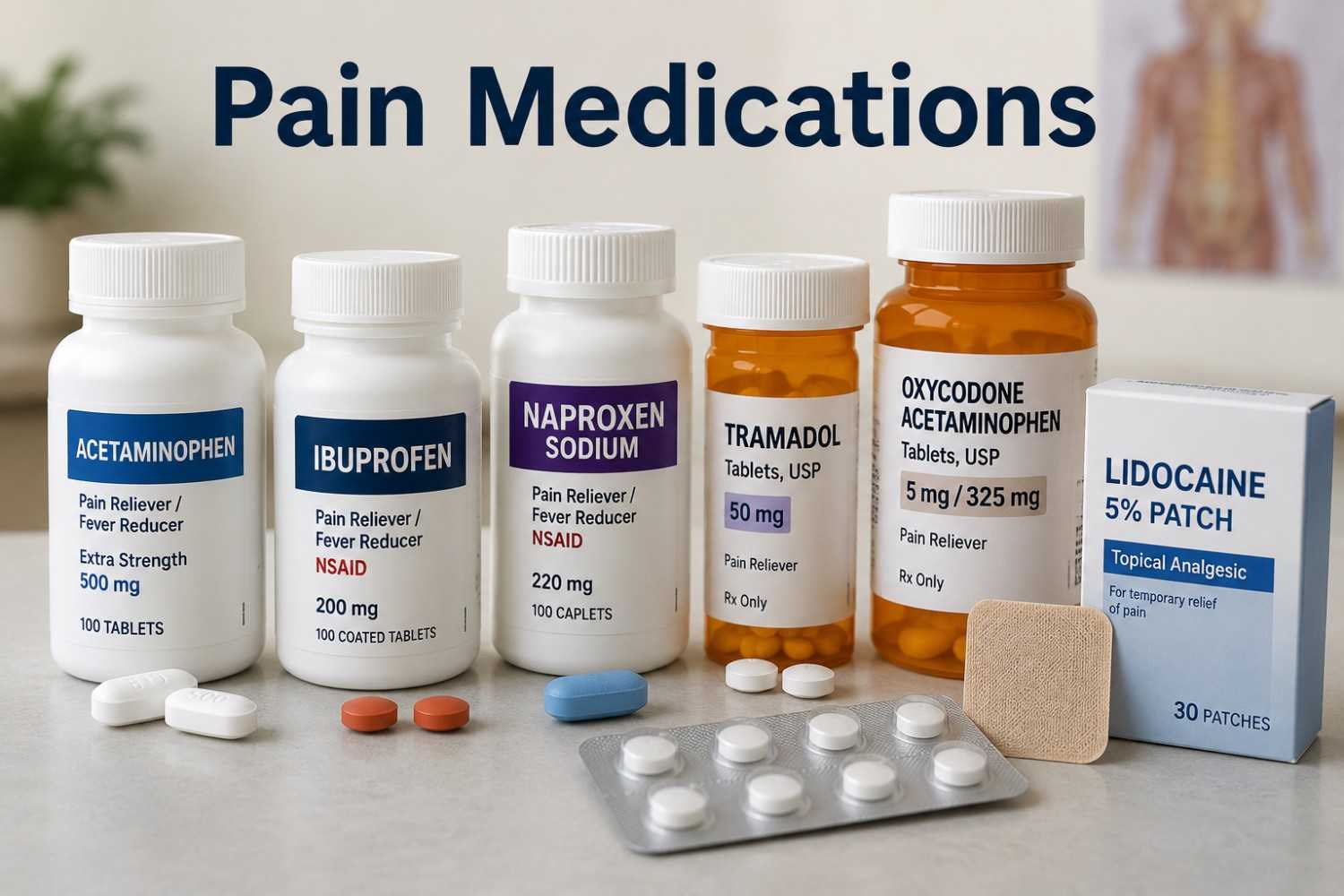
Learn about common pain medications, their types, uses, benefits, side effects, safety tips, and how to choose the right pain reliever for effective relief.
Pain is one of the most frequent complaints that brings people into clinics for treatment; it can be everything from a mild headache to muscle pains after working out or even back pain from an operation. There are many kinds of painkillers used to treat the patient’s pain, each having its own method of action.
What Are Pain Medications?
Pain medicines, which are called analgesics, refer to drugs meant for alleviating pain. These can be purchased without prescriptions at regular pharmacies, while others are prescription drugs meant for managing moderate and severe pain. Analgesics can be classified into a number of types depending on their mechanisms of action.
Common Pain Medications
1. Over-the-Counter (OTC) Pain Relievers
Acetaminophen (Tylenol)
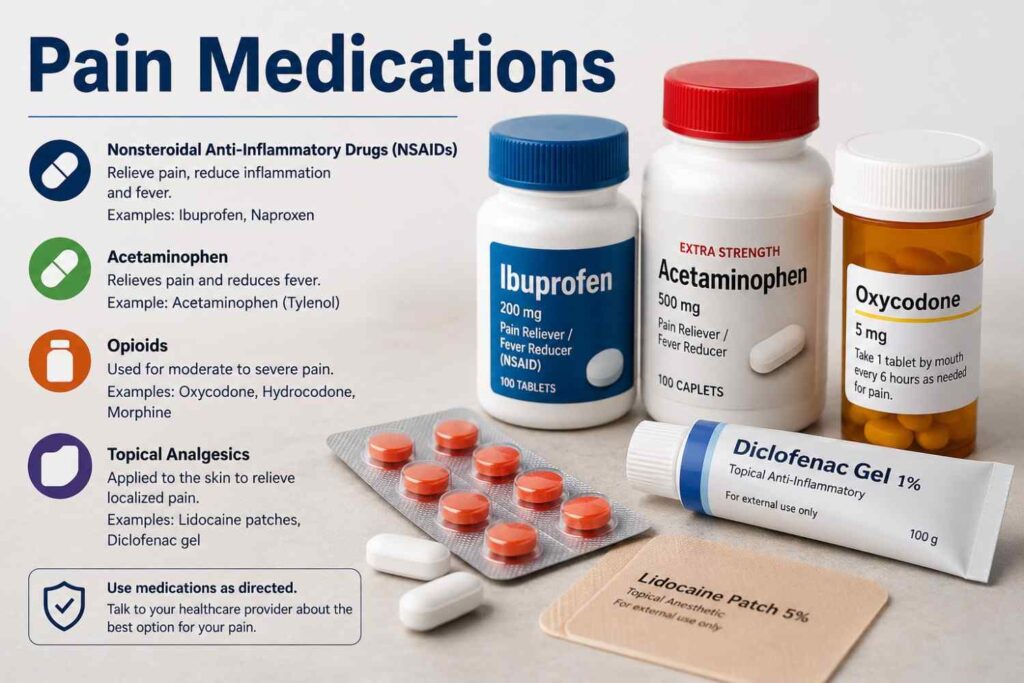
Acetaminophen is the world’s most popular analgesic drug. Acetaminophen exerts its action through the reduction of prostaglandin formation in the brain, which decreases the perception of pain and reduces fever.
Common uses:
- Headaches
- Muscle aches
- Mild arthritis pain
- Fever reduction
Safety note: Acetaminophen is normally kind to your stomach but may lead to severe liver complications if it’s overdosed or consumed together with alcohol. Always ensure that you adhere to the dosage requirements.
Nonsteroidal Anti-Inflammatory Drugs (NSAIDs)
NSAIDs form one of the most widely prescribed pain relievers for both acute and chronic pain. NSAIDs are analgesics that work through the inhibition of COX-1 and COX-2 enzymes.
Common OTC NSAIDs include:
- Ibuprofen (Advil, Motrin)
- Naproxen (Aleve)
- Aspirin
Common uses:
- Headache and migraine
- Pain due to menstrual cramps
- Pain in muscles and joints
- Inflammation following an injury
- Arthritis
Safety note: Long-term use of NSAIDs or at higher doses may lead to stomach ulcers, gastrointestinal hemorrhage, kidney complications, and heart problems. They must be taken carefully, especially by elderly patients.
2. Prescription Pain Medications
Prescription-Strength NSAIDs
For cases where there is inflammation and pain that is more intense, the following strong NSAIDs may be prescribed:
- Diclofenac
- Celecoxib (Celebrex)
- Meloxicam
They are mainly used to treat diseases such as rheumatoid arthritis, osteoarthritis, and other forms of chronic inflammation.
Opioid Pain Medications
Opioids are really strong pain medications usually given for moderate to severe discomfort, such as after surgery, for major injuries, or in cancer pain control. They work by attaching to opioid receptors in the brain and spinal cord, cutting off pain messages and giving a calmer feeling, that’s the whole idea, really.
Common opioid medications include:
- Hydrocodone (Vicodin)
- Oxycodone (OxyContin, Percocet)
- Morphine
- Codeine
- Tramadol
- Fentanyl (for severe cases, often used in hospital settings)
Safety note: Opiates pose significant risks of dependence, tolerance, and addiction even when used as prescribed. The opioids are usually prescribed for a short time period, but in cases where patients need long-term use of opioids, medical professionals keep an eye on such patients.
Muscle Relaxants
Medications that relax muscles are sometimes taken along with pain relievers to ease muscle spasms that occur due to back pain, neck pain, and musculoskeletal injuries.
Common muscle relaxants include:
- Cyclobenzaprine (Flexeril)
- Methocarbamol (Robaxin)
- Baclofen
These drugs affect the central nervous system by reducing muscle tightness, but should be taken for a short time period because of side effects such as feeling sleepy.
Anticonvulsants and Antidepressants for Nerve Pain
Some drugs that have been developed to treat other health problems but are effective in alleviating neuropathic pain include diabetic neuropathy, fibromyalgia, or shingles.
Common examples include:
- Gabapentin (Neurontin)
- Pregabalin (Lyrica)
- Duloxetine (Cymbalta)
- Amitriptyline
These drugs change the way the body perceives pain and are especially helpful in treating nerve-related pain.
3. Topical Pain Medications
Topical analgesics are directly applied to the skin surface in the painful region for targeted results without causing much harm to other bodily functions.
Examples of topical pain-relieving agents are as follows:
- Voltaren (gel containing diclofenac)
- Lidocaine patches/cream
- Capsaicin cream
- Icy Hot, Bengay (menthol-containing rub)
These are commonly used for pain conditions like arthritis of the hand or knee joints, strain, or nerve pain limited to certain areas.
4. Natural and Alternative Pain Relief Options
Though they cannot replace medication, certain people opt to complement the conventional means of treatment using the following, among others:
- Physical therapy
- Turmeric or curcumin supplements
- CBD products
- Acupuncture
- Heat and cold therapy
It is always advised to consult your healthcare professional about any kind of supplement or complementary therapy because they could interfere with medicines.
Best Choice Depends on Your Condition
| Pain Condition | Best Medication Option |
| Headache or fever | Acetaminophen (Paracetamol) |
| Muscle pain | Ibuprofen or Naproxen |
| Arthritis | NSAIDs or topical anti-inflammatory gels |
| Back pain | NSAIDs or muscle relaxants |
| Toothache | Ibuprofen or Naproxen |
| Menstrual cramps | Ibuprofen or Naproxen |
| Nerve pain | Gabapentin or Pregabalin (prescription) |
| Severe injury or surgery | Opioid medications (short-term, prescription only) |
Important: The type of pain reliever that will suit you most is unique to each individual. You should always use the recommended dosage and seek advice from a medical practitioner if your pain persists and worsens.
How to Choose the Right Pain Medication
1. Type and Severity of Pain
Pain type and level will help establish the appropriate drugs to use for treatment. Simple headaches could call for basic painkillers, but chronic pain or post-surgery pain may require prescription drugs.
2. Underlying Health Conditions
The presence of pre-existing illnesses such as kidney diseases, liver diseases, heart disease, and peptic ulcers can influence the safety of medicine. Some analgesics could aggravate the illness condition, which makes seeking advice from medical professionals highly necessary.
3. Other Medications
Think about any prescription medications, over-the-counter medications, or any supplements you are currently taking. Certain pain medications can react to them and increase the risk of side effects, ineffectiveness, or serious complications.
4. Duration of Use
Evaluate whether the medication for pain is for a temporary period or a long-lasting condition. Some medications can be taken temporarily; however, long-term use involves certain risks that need to be minimized by proper monitoring.
5. Risk of Dependency
Some medications that are prescribed by doctors may pose the risk of addiction when taken for a prolonged period. Therefore, consider discussing safer options with your healthcare professional.
Benefits of Pain Medications
Pain medication helps ease pain, reduce swelling, and increase mobility and the ability to recover from injuries and surgeries. They assist in improving daily activities and increasing sleep, and ultimately make your life much more bearable. Used properly, they help in managing short-term as well as long-term pain conditions.
Potential Side Effects of Pain Medications
Medications for pain may have certain side effects like nausea, dizziness, drowsiness, constipation, irritation of the digestive tract, allergy, liver injury, kidney injury, or excessive bleeding, among others, depending on the drug used. Improper use and long-term usage of the drug may result in dependence, particularly in the case of opioid drugs.
Safety Tips for Taking Pain Medications
- Never use beyond what is advised.
- Do not combine different pain relievers without professional guidance; their combination can be harmful, particularly the combination of NSAIDs and blood thinners.
- Be careful about consuming alcohol while using acetaminophen or opioids.
- Keep all medications stored securely where neither children nor animals can access them.
- Never discontinue prescription medication on your own without first consulting your physician, particularly opioids and specific nerve pain medications.
- Beware of any allergic reaction symptoms like rashes and swellings.
Who Should Be Extra Careful with Pain Medications?
The elderly, pregnant or nursing mothers, children, and those with diseases such as liver disease, kidney disease, heart disease, and stomach problems should use analgesics cautiously. Those who take several drugs or those with a history of abusing drugs should always seek advice from their doctors before taking any painkillers.
FAQs
Can I take ibuprofen and acetaminophen together?
Certainly, these types of medicines function in a different way and can be administered together depending on medical advice for more effective pain treatment.
Are opioids the strongest pain medications available?
Opioids are some of the strongest painkillers available and are used only in moderate and severe cases of pain because of their dependence-inducing properties.
How long can I safely take NSAIDs?
Temporary use is safe in most cases; however, prolonged use must be under the supervision of a physician because of possible problems with the digestive system and kidneys.
Conclusion
Pain medications can provide great relief when it comes to various medical problems. It is very important to know what kind of medication you have, its advantages and disadvantages, possible side effects, and how it should be taken safely. It is very important to take the right dose and consult your doctor about it.